• Blog
  • BIO
  • To Assume a Pleasing Shape
  • Press
  • Audio and Video
  • Essays & Criticism
  • Events
  • Contact

Joseph Salvatore

Joseph Salvatore

Author Archives: Joseph Salvatore

The Brooklyn Rail’s interview with Ayana Mathis, April 2013

04 Thursday Apr 2013

Posted by Joseph Salvatore in Blog, Press

≈ Leave a comment

Tags

Ayana Mathis, Book Club 2.0, Jenine Holmes, Joseph Salvatore, Oprah Book Club, Oprah Winfrey, The 12 Tribes of Hattie, The Brooklyn Rail, The Twelve Tribes of Hattie

So pleased to publish this interview with writer Ayana Mathis, author of THE TWELVE TRIBES OF HATTIE, in the April issue of The Brooklyn Rail. “I … write from character and from story … But one of the things very present in my mind—once I realized I had a book—is class. It’s as important to this book as is the Great Migration, this notion of the way, in a pre-civil rights world, where no one had any money, how we decided on class. Which had everything to do with what neighborhood you lived in, or how light or dark you were, and your diction—all these kinds of things.” –Ayana Mathis, The Brooklyn Rail, April 2013.

http://www.brooklynrail.org/2013/04/books/ayana-mathis-with-jenine-holmes

The Brooklyn Rail — Book Review, March 2013: Warren Ellis’s GUN MACHINE, by Ben Pfeiffer

15 Friday Mar 2013

Posted by Joseph Salvatore in Uncategorized

≈ Leave a comment

My delight in editing the book review section for The Brooklyn Rail is finding smart, emerging writers like Ben Pfeiffer, who, in the March issue, has this to say about Warren Ellis’s powerful new novel GUN MACHINE: “(The novel) takes the reader into several ghost maps laid out over New York City like superimposed squares of vellum…(T)he book (is) chiaroscuro—a collection of bold contrasts made with alternating pools of light and darkness—as opposed to classic noir. Or, to put it another way, Gun Machine is noir at light speed.”  Read it here.

NCTE/CCCC 2013: Riviera Hotel, Las Vegas, Thursday, March 14th, 2013, 6:30 PM

14 Thursday Mar 2013

Posted by Joseph Salvatore in Blog, News & Appearances

≈ 2 Comments

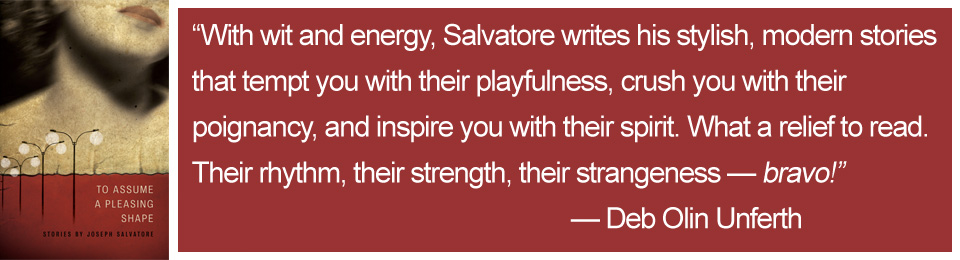
To all you grammar-geeks and sentence-slaves: I’m in Las Vegas at the NCTE/CCCC conference, chairing a panel on grammar and sentence style for writers and teachers: Thursday, March 14th, 2013, at 6:30 PM: “Progressive Approaches to Grammar, Punctuation, and Usage” (scroll to bottom for TSIG.22), at the Riviera Hotel. Here’s the view from my window last night.

vegas1

AWP 2013: Faneuil Hall, Boston, MA, Thursday, March 7th, 8 PM

22 Friday Feb 2013

Posted by Joseph Salvatore in Blog, News & Appearances, Press

≈ Leave a comment

Dear ol’ Boston friends: on Thursday, March 7th, 8 PM, I’ll be reading alongside some great writers in Faneuil Hall, at Bell In Hand Tavern. Please come by, have some drinks, give me a hug hello, and hear some wonderful writing. Hope you can make it.

East / West Reading

Location: Bell In Hand Tavern, 45-55 Union Street, Boston, Massachusetts

Cost: Free

East Coast writers match off against West Coast: Pam Houston, Deb Olin Unferth, Joseph Salvatore, Matthew Vollmer, Scott Cheshire, Christopher Kennedy, David Hollander, Kim Chinquee, Sam Ligon, Lily Hoang, Carmen Gimenez-Smith, Robert Lopez, Aurelie Sheehan.


Marymount Manhattan College, Thursday, December 6th, 2012, 6:00 PM

30 Friday Nov 2012

Posted by Joseph Salvatore in Uncategorized

≈ Leave a comment

Delighted to be reading with writer Andrew Cotto (Outerborough Blues).

Thursday, December 6th, 2012.  6:00 PM

Marymount Manhattan College

Commons West

221 East 71st Street, NY, NY 10021     

1-212-517-0400


H.I.P. Reading Series, East Village, NYC, at BAR ON A (located Ave. A & E 11th St.), at 7 PM

12 Thursday Jul 2012

Posted by Joseph Salvatore in Blog, News & Appearances

≈ Leave a comment

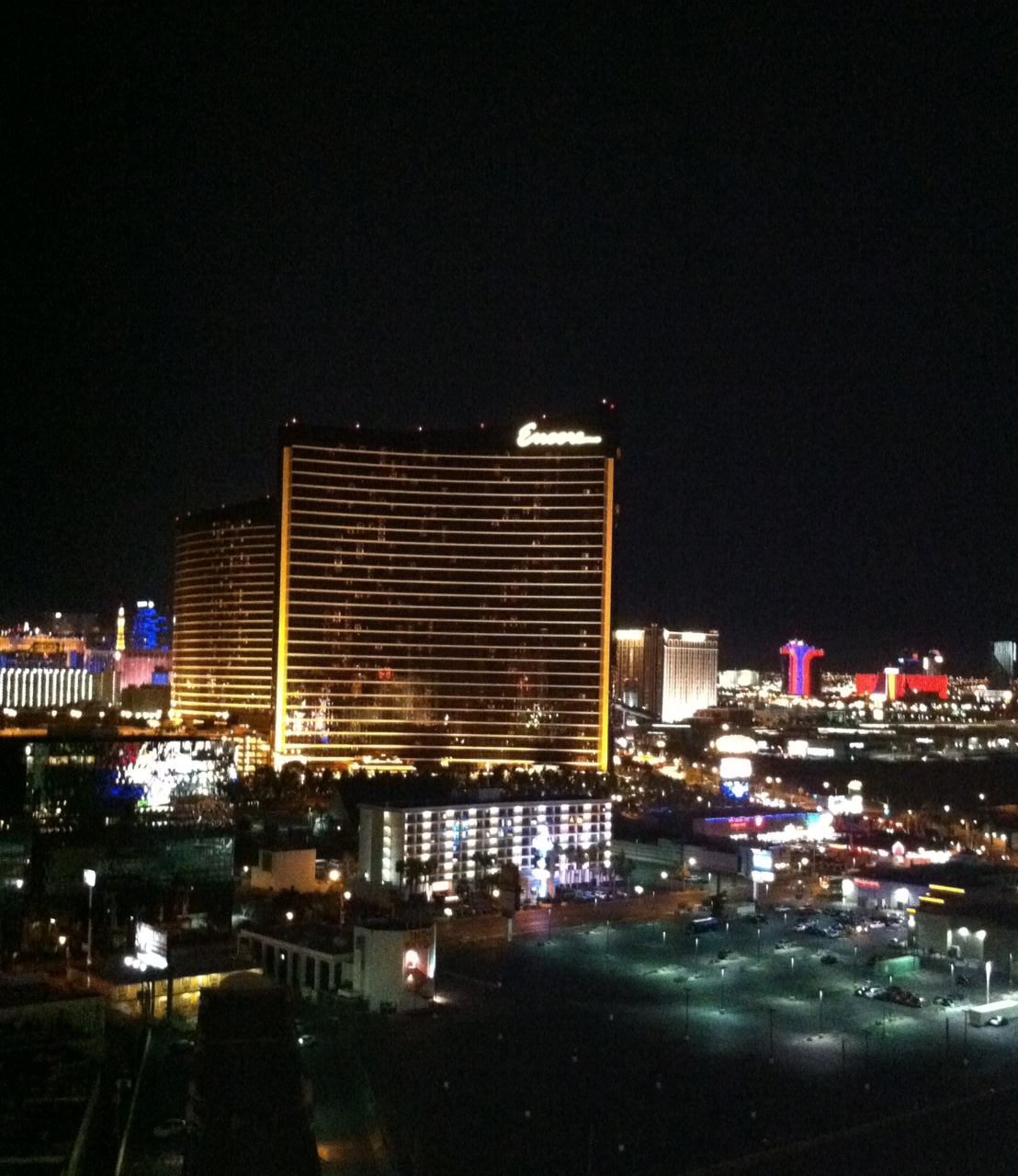
I first watched the film FRIDAY THE 13TH, the “haah-haah, shhh-shhh” original with Mrs. Voorhees protecting her misunderstood son Jason, when I was very, very young. In fact, one might say: inappropriately young. Come out on this Friday the 13th to see what effect that viewing had on my personality and overall well being. I will read from my own extremely psychologically revealing writing at the H.I.P. Reading Series, East Village, NYC, Ave. A & E 11th St., at 7 PM.

Fellow readers will be the much more well-adjusted Courtney Maum and Carter Edwards.

Special thanks to HIPster Brittney Canty!

http://www.facebook.com/events/389064521152921/

Excerpt of new story published, summer 2012

22 Friday Jun 2012

Posted by Joseph Salvatore in Blog

≈ Leave a comment

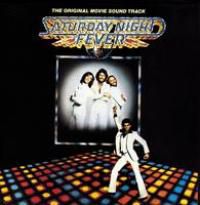
Inspired by works like WIDE SARGASSO SEA and ROSENCRANTZ AND GUILDENSTERN ARE DEAD, I’ve begun a story retelling the film SATURDAY NIGHT FEVER from the perspective of a minor character: Bobby C, the skinny boy with big hair who wears platform shoes, gets his girlfriend pregnant, and falls off the Verrazano Bridge. The story is told in vignettes, all titled from the film’s soundtrack. The good folks at Virginia Tech’s TOAD THE JOURNAL have just published a few excerpts from this work-in-progress. Most grateful to them for their belief in the piece at this early stage.

Thanks to Toad le Journal and Matthew Vollmer.

The story is called “Got the Wings of Heaven on my Shoes.” Click here: http://toadthejournal.com/issue-22/joseph-salvatore/

“Faith Times at Liberal High” – Alana Joblin Ain on faith, family, parenthood, and language

13 Wednesday Jun 2012

Posted by Joseph Salvatore in Blog

≈ 1 Comment

Parent, poet, professor, Alana Joblin Ain has contributed a thoughtful, witty, rigorously honest piece on faith, family, parenthood, and language — a response to (and along with) the folks involved in this conversation about religion and culture, some of whom have posted on this blog: Scott Cheshire, Steve Crampton, and soon to come, Erika J. Galluppi.  Alana’s piece is called “Faith Times at Liberal High.”  I would love to hear what you think.

Faith Times at Liberal High

When I hear negative experiences of religion — which is often and for good reason — I sometimes think about my students’ initial reaction to poetry: they tell me it is pretentious, inaccessible, irrelevant, boring, anachronistic. And I don’t disagree: I think that a lot of poetry is just those things. But then I spend 15 weeks trying to expose them to other types of poems, verses that have mattered to me, that feel alive and relevant and worth reading. And they often say: “I didn’t know this was poetry.”

This is not dissimilar from my experience with Judaism where, in Hebrew school, I learned primarily suffering: the holocaust, the pogroms and of the tragic Triangle Shirtwaist fire. Certainly not a compelling reason to keep the faith. But at the same time my grandmother taught me prayers and read me torah stories from her silver plated bible, and because I always loved stories, I loved these stories. I didn’t know what to make of them, but I held them close.

When my family moved to a rural area for my high-school years, suddenly my brother and I were the only Jews, a detail about my life I did not immediately disclose.  While in Germany singing Mozart’s Requiem –- a truly holy experience -– my host family asked what I had gotten for Christmas and I answered: a bicycle, a record player and whatever else I imagined the desire of earnest Christian teens.

Years later, in college, I read the philosophers: Spinoza, Buber, Heschel – and I had the experience of my students: This is Judaism?

But how do we talk about faith?  There are the inherent limitations of language, not to mention general issues of semantics (already in this conversation our tent has widened from conservatives to religious conservatives to religious faith).

So, I will attempt to discuss aspects of my faith.

The sacred is that which I hold dearest to my heart and whole being. It is not what I pray “to” but what I pray to be worthy of — it feels pre-verbal. It is more than love and respect and devotion, but embodies those things. The sacred, to me, feel like moments of grace or mercy or utter inexplicable beauty which make me want to pray or express gratitude to what I call God.

A personal anecdote, which, for me, embraces faith and critical thought, as well as the limitations of language: After the birth of my daughter, ten months ago, I experienced an extremely difficult post-partum.  When I confided in others that I was feeling waves of sadness and anxiety, they responded that this was normal.  A couple of months later, as it worsened, I became more specific: I spent seven hours terrified for no reason, or felt bereft in a way I did not believe would ever pass, and someone gently suggested that I had postpartum depression.  I am a person of faith, the wife of a rabbi, but I didn’t pray for God to “cure me” like the plot of one too many prime-time dramas. I went to a doctor. And I continued to pray for the strength to receive help, and gratitude for my life. Faith and science don’t feel mutually exclusive; the religious framework that I affiliate with holds room for nuance — it demands this type of discourse.  Even in those darkest of days, I found it impossible to look at the ocean and not pray.

Still, I don’t feel particularly implicated by the speculation that I, personally, might be incapable of both critical thought and religious faith. Perhaps because my expression of religious faith doesn’t feel conservative (especially in a sea of artists and academics: my belief in a God feels downright liberal!) And, so, it doesn’t pose a divisiveness, in the same way that atheists don’t seem troubled crooning Bob Marley lyrics in praise of God at their summer barbeques.

I do love Steve’s question about other avenues for expression of community and grappling with the big questions.  If I felt that I could openly discuss, in the artistic and academic community – and not in a theoretical way — issues of alienation, experiences of joy and meaning without fear of loss, expressions of mercy and grace, well, I’d be racing to the faculty lounge.  Thanks to Joe for getting us started with these online office hours.

Meanwhile, I keep coming back to a Franz Wright poem:

Year One

I was still standing
on a northern corner

Moonlit winter clouds the color of the desperation of wolves

Proof
of your existence? There is nothing
but.

__________________________________________________________________
Chaos and Community: Steve Crampton on faith vs. religion

30 Wednesday May 2012

Posted by Joseph Salvatore in Blog

≈ Leave a comment

In response to last week’s blog post about an article on whether or not conservatives hate English classes, musician, teacher, lawyer, husband and dad Steve Crampton had this to say:

I suppose you have to have faith to make it through life. The main purpose of science, it seems to me, is prediction. If I throw an apple in the air, the theory of gravity predicts that it will fall to the ground. However, life is so complex that predictions about whether I will make it through the next year without getting cancer, or without something terrible happening to one of my loved ones, is impossible to know. But the weather report for Saturday is looking good, so I have faith that my daughter’s birthday party on that day is going to be fun.

This kind of faith is not the same as religion. I have thought about religion for a long time, starting when my first serious girlfriend, a dedicated Catholic, encouraged me to come to church with her. I spent the Summer reading the whole Bible, trying to figure out what it was all about. Everything I have observed and read since has led me to the conclusion that religion is at bottom a fraud.

Every religion I have heard about asks its adherents to have “faith” in what others tell them or have written. Essentially, those in power say, I cannot prove these things, indeed, many of them do not even make sense, but I want you to believe in them (or at least pretend you believe in them). And, oh yeah, give me some of your money (and sex and power). It reminds me of a fraternity rite where the brothers all claim to believe in some crazy superstition. Their common stated belief helps bind them together, but it is based upon a fable.

Are there things beyond human comprehension? Of course, and there always will be. Will terrible things happen to us that challenge our will to go on? For most of us, yes. Is it nice to have a community to support us in troubled times? Yes, yes. But, do we really need to say that we believe some guy named Noah lived to be hundreds of years old and then took two of every animal species onto a wooden boat, while every other creature and person on the planet drowned? Is this even remotely plausible? Do we need to affirm a belief in a god, who despite being all-knowing, all-powerful, and all-good allows young children, babies even, to die horrible and painful deaths, particularly in the third world?

__________________________________________________________________
The Sacred and the Secular: writer and critic Scott Cheshire on literature, conservatism, and religious faith

23 Wednesday May 2012

Posted by Joseph Salvatore in Blog

≈ Leave a comment

In response to yesterday’s blog post about an article on whether or not conservatives hate English classes, the writer and critic Scott Cheshire had this to say:

“Fascinating article – as is your response to it – I don’t know that I can contribute much to the conversation except this: my own background is quite specific, about as conservative as conservative can get, that of fundamentalist American Christianity. And so my experience, on one hand, might not be considered entirely representative, BUT, on the other hand, in the words of William James, one might call it the “exaggerated form.” In other words, we can learn more about a thing by seeing it as if through a microscope, and see its every possible distortion. With this in mind, I know this much: college as a whole is dangerous to the religious conservative. And not subconsciously – sermons and literature explicitly discourage, even forbid the furthering of education. Not in every case, sure, but certainly this was how it was in my case. I think the reason for this is obvious and you mention it – faith will be challenged. Now when it comes to English classes specifically, I have found the attitude more vague, almost disinterested, at times conflicted. Why? I believe this is because conservative religious thinking inherently has a deep respect for the written word. The book is important. Of course, that written word is the Bible and any affiliated religious literature (pamphlets, magazine, more books) – nevertheless there is something about the page – any page – that retains significance. And so one often finds the attitude shifts to a tone more like this: it’s not reading that is harmful, in fact it’s a potentially sacred act, but time wasted reading secular works is time that could be, and should be better spent reading biblical works. This for me is the crux of the problem (this you also mention above): art is all about questioning. Good art raises questions. Lesser art often gives you an answer, or the answer. Religious conservatism is in no way interested in questions, because they already have an answer, the answer, in fact. They have it all figured out. And so a painting, book, or a piece of music that gives rise, in some, to a feeling of melancholy (for instance) regarding the “meaning of life,” will largely not do so in the case of a religious conservative. I have experienced this myself (when I was a much younger man), and continue to witness this in the case of family and friends who are still very much a part of this culture. Now how does this relate to conservatives at large? Not sure. But I do have a sneaking suspicion that it has to do with a sort of watered down version of the same. English classes have traditionally used works of art to interrogate the meaning of human existence (within and without the work), but chiefly remain anchored to the work itself (what does David Copperfield mean? What can it tell us about life?); however, English classes now increasingly use these same works as occasions to more deeply interrogate the work of life outside the work (what does David Copperfield tell us about economic-gender roles with regard to post-industrial pre-post-modernism? ugh). This is scary for conservatives, because it raises the book to a more scared place – as they see it. The contemporary book (and so contemporary art) more directly competes with tradition. Although one would argue it does the opposite and wants only to bring both traditions down to the ground.”

_________________________________________________________________
← Older posts
Newer posts →

Recent Posts

  • KGB Reading: Friday, April 25, 7-10 PM
  • Parenting, Publishing, and Process – Pen Parentis & The New School Event 10/22/24, 6 PM, Room 407, 66 West 12th Street
  • I’ll be in conversation with Italian author and translator Claudia Durastanti on Monday, April 4th, 2022, 6 PM
  • Interviewed in the Los Angeles Times about my class on Don DeLillo
  • “The Body Artist: A Conference in Don DeLillo” — April 28-29, 2017, The New School, NYC

Categories

  • Blog
  • Books
  • Essays & Criticism
  • New York Times Book Review
  • News & Appearances
  • Press
  • The Brooklyn Rail
  • To Assume a Pleasing Shape
  • Uncategorized
  • Word Wednesday

Archives

  • April 2025
  • October 2024
  • April 2022
  • October 2020
  • September 2020
  • May 2020
  • September 2019
  • March 2019
  • January 2019
  • March 2018
  • January 2018
  • July 2017
  • August 2016
  • June 2016
  • April 2016
  • March 2016
  • January 2016
  • October 2015
  • September 2015
  • July 2015
  • June 2015
  • May 2015
  • April 2015
  • December 2014
  • September 2014
  • June 2014
  • May 2014
  • April 2014
  • March 2014
  • February 2014
  • December 2013
  • September 2013
  • August 2013
  • May 2013
  • April 2013
  • March 2013
  • February 2013
  • November 2012
  • July 2012
  • June 2012
  • May 2012
  • March 2012
  • February 2012
  • January 2012
  • December 2011
  • November 2011
  • October 2011
  • September 2011
  • May 2011
  • April 2011
  • March 2008

Meta

  • Create account
  • Log in
  • Entries feed
  • Comments feed
  • WordPress.com

Enter your email address to follow and receive notifications of new posts by email.

Create a free website or blog at WordPress.com.

Privacy & Cookies: This site uses cookies. By continuing to use this website, you agree to their use.
To find out more, including how to control cookies, see here: Cookie Policy
  • Subscribe Subscribed
    • Joseph Salvatore
    • Join 58 other subscribers
    • Already have a WordPress.com account? Log in now.
    • Joseph Salvatore
    • Subscribe Subscribed
    • Sign up
    • Log in
    • Report this content
    • View site in Reader
    • Manage subscriptions
    • Collapse this bar
 

Loading Comments...