Thanks to Prof. Erika J. Galluppi at East Carolina University for sharing this IHE article on why conservatives hate English courses.
I’m not so sure they do, however. And author Mexal’s tone (how many times must he repeat “cultural Marxist theory”?) didn’t always make me feel he did either. (Also, his using Breitbart as his departure point felt to me [who actually believes strongly that conservatives are indeed not English-haters, but are rather, in fact, threatened by any idea that questions their traditional beliefs (the terms themselves support this: a “liberal” prefers a variety of opinions and is open to change based on those views — i.e., separation of church and state is a concept that liberals tend to favor over conservatives and is one that seems to have come about from previous experiences of “traditional” religious connections to a “traditional” government — and a “conservative” prefers to keep in place traditional behaviors and beliefs and is not open to making changes based on any new or diverse reasoning that might challenge their traditional behaviors and beliefs] lame and embarrassing: i.e., why not cite Jesse Ventura’s opinions on English classes, or George W Bush’s. As someone deeply and spiritually interested in the argument, I wish Mexal had picked a less-easy target (I won’t even discuss the fact that the gentleman is dead).
As a young English major in college (after being an even younger psych major, business major, criminal justice major), I attended a talk and interview by Reagan’s speech writer Peggy Noonan. She was promoting her memoir WHAT I SAW AT THE REVOLUTION, and was being interviewed by the late conservative/civil libertarian Boston talk-show host David Brudnoy — himself a brilliant speaker and thinker and well-read gentleman (an American Studies degree from Harvard) whose own homosexuality and homophobia may have lead to his death from AIDS (ah, but I digress). Brudnoy commented on Noonan’s writing talent and Noonan talked about how reading the ancient classics and modern classics (such as Yeats) not only enriched her life, but enriched her writing, as well. Reading, she said, was the key to good writing. I swooned, caring not that she wrote speeches for one of the most anti-intellectual presidents of our time. Stephen King (most definitely not a conservative) makes the same point as Noonan about reading in his ON WRITING. In fact, King’s stridency on the point seems less “liberal” and more “conservative” than Noonan’s.
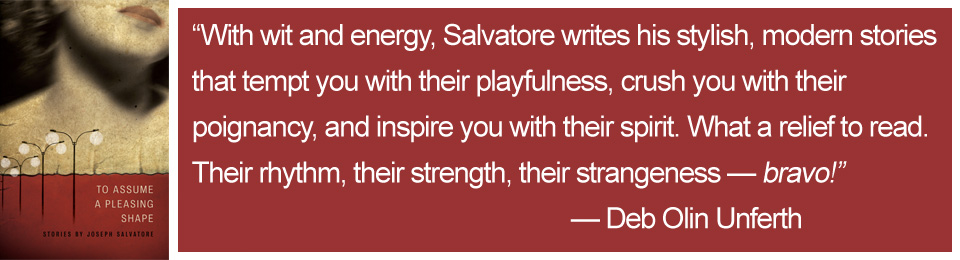
Before I went to college, my mother, a devout Roman Catholic, shared with me an article on the relationship between going to college and losing one’s religious faith. The article suggested that education at its basis was about questioning accepted truths and that this made holding onto one’s faith-of-origin difficult. (I still have this article somewhere.) Then in college I read Kierkegaard’s FEAR AND TREMBLING (or it might have been THE SICKNESS UNTO DEATH) where he questioned faith-of-origin, and I thought, “Whoa, here it comes. My mother was right. I’m about to “have my faith challenged” in a college literature and philosophy course.” I held on white-knuckled as I read the book. Kierkegaard asked a simple question: How can one be a Catholic if one was born a Catholic? How can one be a Jew if one was born a Jew? How can one be a Muslim if one was born a Muslim? These seemed like gentle enough questions to ponder, I thought in my college’s library. (Thinking also, of course, that the devil hath the power to assume a pleasing shape.) Truth be told, I was able to think about why I was calling myself a Catholic back then in a way I had never considered before. I realized I hadn’t been in spiritual crisis as a baby and hadn’t needed that specific religion to help me make sense of the existential terror of this random and uncaring universe while my binky was virtually attached to my mouth, and had not asked my parents to baptize me into the faith. I may not have had that experience — the challenging of my accepted, traditional beliefs — had I not gone to college and taken that lit class (so, thank you Mom and Dad for sending me). And I realized something else: those deeply challenging questions may have reinforced, if not forged anew, my own religious faith. Made it my very own and not the bequeathing of my parents. Or it might have made me see the randomness of all religious impulse in our “what-a-piece-of-work-is-man” mammalian brain tissue and humanoid nerve endings and fearful and trembling and sick and dying flesh and bones. Could be either way, I guess.
All this is to say that Mexal is touching on a classic debate in literary criticism: the fear of art. Plato feared it: Book 10 of THE REPUBLIC says that we will will feed and bathe the poet, crown him with laurel, and then kick him out of our Republic, for he trucks in “images” (contemporary conservatives, in Mexal’s mind, replace “images” with “English classes”). And Aristotle embraced art: In PHAEDRAS he discusses the soul-enlarging (“psychagogia”) experience that comes from words. In POETICS he discusses aanother experience that comes from words: “catharsis,” the purging of emotions through the experience of terror and pity that well-made art (tragedy) can provide. Reductively put then: Art can produce catharsis that can produce psychagogia that can produce a challenge to one’s traditional belief system. Or even more reductively (and dangerously irresponsibly [i.e., bordering on propaganda]) put: Art produces a startling challenge to our traditionally held beliefs by allowing us to experience lives that aren’t our own, and in the doing we see how it might feel to be in a predicament in which we would not want to see not only ourselves, but anyone else. So this psychagogia, this enlarging of the soul (whatever one wants to accept of that problematic term), may very well lead to empathy. And with empathy comes the challenge to help others, make the world a better place for everyone, not just members of our own political party.
Yesterday, NPR’s show “Morning Edition” did a piece on the sentences of politicians. A student of mine this term, in my grammar and style course, did an analysis of Lincoln, whose sentences were, for his time, short and clear. What do you imagine to be the grade level of our contemporary Congress?
NPR’s Morning Edition: http://tinyurl.com/c7tlwkt
Essay on why conservatives hate English courses | Inside Higher Ed: http://tinyurl.com/7uycjpo
__________________________________________________________________

 Joseph Salvatore